While looking for evidence, expert letters, and petition narratives, most EB1A
applicants often overlook
that one
overlooked component of their EB1A application can significantly delay processing. This component has to
do with
the address you file your I-140 Form and the service center within the USCIS you select.
Consequently, applicants may inadvertently invoice/submit their I-140
to the wrong service center or address. In turn, this can add several weeks to months of delay,
depending on the circumstances, and create the impression that all service centers process applications
with equal processing times.
Also, keep in mind that a case's processing time is determined by its routing within USCIS and is
directly related to the service center it was routed to and the service center's current caseload
backlog. In fact, mechanically stalled cases do not fail based on the merit of your application.
Instead, they fail due to the application's mechanical elements.
2. How the I-140 Filing
Address Impacts EB1A Processing
Your unique filing address will be the initial point of receipt and routing of your EB-1A Green Card
Petition.
Accordingly, the unique routing number will help indicate the appropriate I-140 filing location based
upon the
following criteria:
Paper or electronic filing format.
Premium Processing requested or not.
Delivery Method (i.e., U.S. Postal Service versus Private Carrier).
The most frequently occurring (and most misunderstood) filing location issues relate to the use of USCIS
LockBox addresses versus the service center addresses. Even when the USCIS internally forwards the
package to the correct LockBox service center or office, there is still a delay in the following:
Issuance of case receipt notice
Entry of the case into the USCIS system
Exposure to the current backlog for all I-140 filings for that service center.
Therefore, always confirm current I-140 mailing addresses/filing locations according to official USCIS
instructions.
3. Understanding USCIS Service Center Assignment
USCIS directs cases to a service facility upon receipt for processing of their I-140 petitions via the
EB1A classification as follows:
Texas Service Center
Nebraska Service Center
It is not possible for an applicant to choose which USCIS service center will process their petition.
This is determined by factors such as workload balancing, petition type, and filing method.
Also, I-140 processing facilities are not all the same; some have historically had significantly more
backlogged I-140 cases than others, leading to longer delays for standard-processing EB-1A petitions.
Yes. Each service center maintains its own queue and staffing levels. The impact of service
center on EB-1A timelines can be significant.
Factor
Effect on I-140 Processing Time
Higher backlog
Longer review queue
Staffing shortages
Slower adjudications
Internal transfers
Temporary pause in review
Premium processing
Action within 15 business days
While premium processing and service center differences still exist, premium processing guarantees
USCIS
will take action within the designated timeframe. It does not eliminate RFEs or prevent case
transfers.
5. Common Filing Address Mistakes That Cause Delays
There are numerous avoidable mailing errors in the delivery of I-140 petitions. Typical errors include
the following:
Old USCIS filing instructions used:
Sending premium processing requests to non-premium locations
Using a mix of courier and USPS mail for the same filing
Incorrect lockbox address for required filing fees.
All of these mistakes can result in either:
rejection of the filing,
return of the filing to the sender, or
delay of intake through a delay in the approval of an I-140 because of a delay in its delivery.
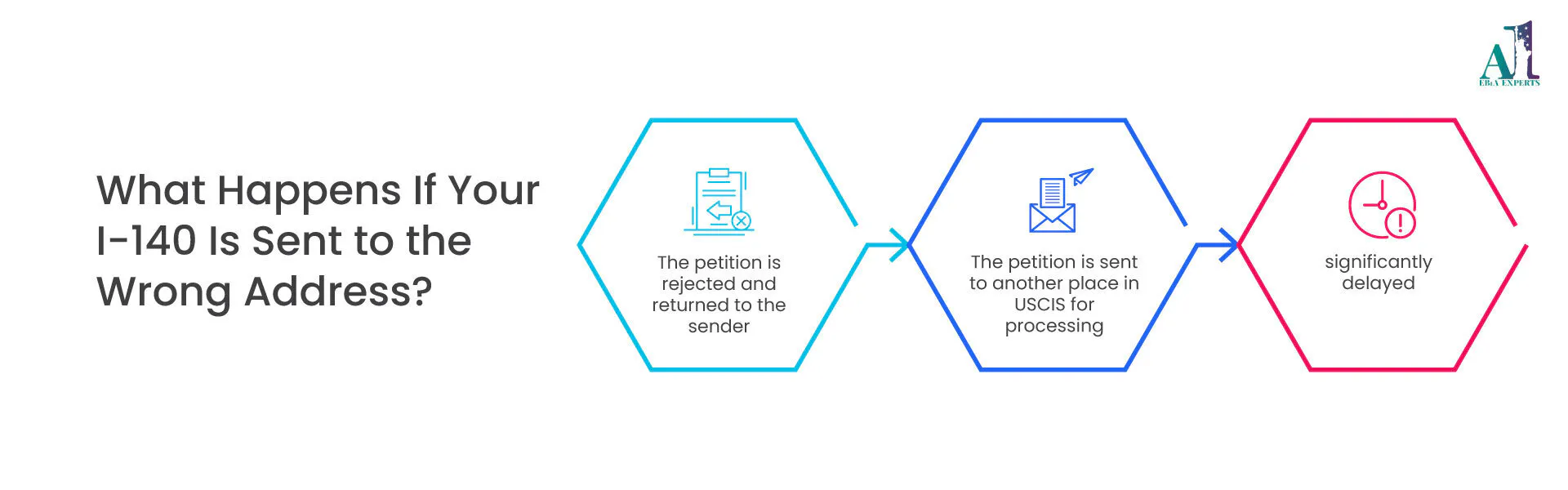
6. What Happens If Your I-140 Is Sent to the Wrong Address?
What will occur if USCIS receives your I-140 petition at an incorrect address is
as follows:
include:
The petition is rejected and returned to the sender, or
The petition is sent to another place in USCIS for processing, or
significantly delayed.
Even if your I-140 is forwarded from an incorrect address to the correct one, it can still affect your
receipt date, which can impact your overall strategy, such as concurrent filing and monitoring the
timing of your adjustment of status.
7. Can USCIS Transfer an EB1A I-140 Between Service Centers?
Yes.
USCIS has the right to transfer I-140 petitions for workload purposes. However, an applicant cannot
request a transfer for the purpose of faster processing. A petition may be delayed further if it has
been assigned to a new center.
8. Is Online Filing Safer Than Mailing an EB1A I-140?
E-filing eliminates several risks associated with mailing in the I-140:
Incorrectly filing an I-140 at the wrong address
Routing errors that occur after mailing
Confusion as to which courier service will be used
Using e-file will often result in a quicker receipt of the I-140, but approval is still based on the
quality and eligibility of the evidence.
9. Does Filing Location Affect Approval Chances?
No.
The processing center chosen by the applicant will affect processing speed but not approval standards.
Every center has the same EB1A approval criteria. Approval will be based on the strength of the
evidence
submitted, not on where the applicant lives.
10. How to Minimize EB1A Delays Caused by Filing Errors
Verify that the I-140 is being mailed to the correct address
Double-check your I-140 forms, include a check for correct fees, and the correct delivery method
Use Premium Processing if you cannot wait for your I-140 to be processed in the normal time
Regularly monitor the USCIS website for any processing updates
Retain competent legal counsel with experience in I-140 matters
A little administrative care will save you from having to experience major delays in processing your
EB-1A I-140.
11. Conclusion
Your I-140 filing address and service center assignment may seem administrative- but they
directly shape
your I-140 processing time.
Strong evidence wins approvals. Correct filing prevents unnecessary delays. Both matter.
12. FAQs
Why does the I-140 filing address matter for EB1A petitions?
The filing address determines where USCIS first receives and routes your petition. Using the wrong
address can
delay receipt notices and increase exposure to adjudication backlogs.
Can the wrong I-140 filing address cause EB1A processing delays?
Yes. A Wrong I-140 address delay can result in rejection, return, or internal forwarding — all
of
which extend processing timelines.
How does USCIS decide which service center handles an EB1A I-140?
USCIS assigns cases based on workload distribution, petition type, and intake channel. Applicants
cannot
directly
select a service center.
Does service center choice affect EB1A processing time?
Yes. I-140 processing center differences mean some centers may adjudicate faster than others
due
to backlog and staffing levels.
Which USCIS service centers process EB1A I-140 petitions?
Primarily the Texas Service Center and Nebraska Service Center handle EB1A I-140 petitions, though
transfers can occur.
How can I find the correct I-140 filing address for EB1A?
Always check the latest USCIS filing instructions on the official USCIS website immediately
before
submission to
confirm the correct address.