1. Introduction
There is a lot of uncertainty about how long the wait will be for your immigration petition. It can also
be stressful, particularly when your USCIS case
status hasn’t changed for an extended period and the
only available status is "Case Was Received." Many applicants believe there may be problems. However,
the status "Case Was Received" generally indicates a normal receipt. Because your case status is in the
USCIS online case tracking system, you may see very few updates, even though it is progressing through
internal processing steps at USCIS. A delay is not an indication of a denial or mistake. By
understanding what this specific status means, you can reduce your stress and respond with strategy
rather than emotion.
2. What Does “Case Was Received” Mean?
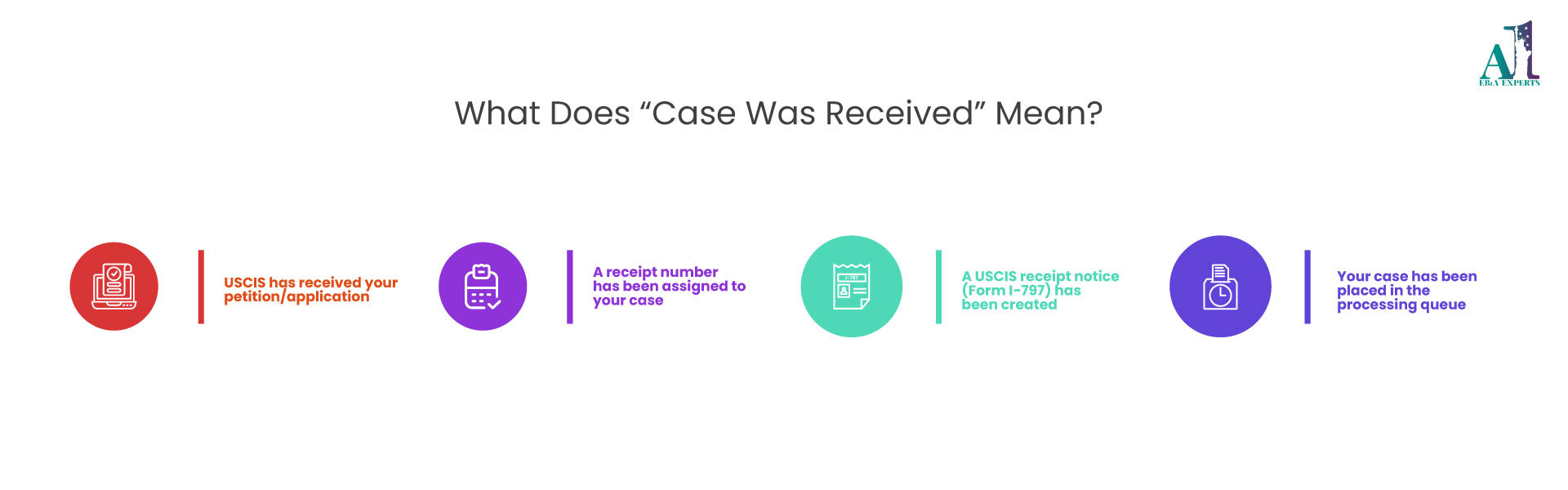
When you see your “USCIS case was received” status on the USCIS internet system, it means:
- USCIS has received your petition/application
- A receipt number has been assigned to your case
- A USCIS receipt notice (Form I-797) has been created
- Your case has been placed in the processing queue
3. Receipt Notice (I-797) Explained
The I-797 receipt notice means that your application has been accepted but not approved. It is the
official start date for the processing time for your immigration application.
The majority of the time, this does not mean an officer has begun a substantive evaluation of your file,
it simply indicates that the application met the initial requirements for filing and is now waiting in
line to have its substantive review completed.
4. Why Your USCIS Case Status Hasn’t Changed in Months?
Here are a few reasons that cause concern when an immigration
case is pending for a long time.
- Surges in national filings cause delays for backlogged cases awaiting processing.
- Some forms experience a seasonal spike in filings.
The U.S. Department of Homeland Security (DHS) and USCIS continue to discuss the current backlog of
cases and the ongoing need for USCIS to address processing delays that reflect volume rather than
individual case issues.
2. Background Checks and Security Screening
- FBI name checks
- Inter-agency security clearance required for all applicants
- Review of identity before submission of the application
These activities occur behind the scenes, so waiting for the status of a USCIS case to change does not
mean inactivity.
3. Service Center Workload Differences
Processing speed can vary by service center location, so some service centers may have a noticeable
delay relative to the time of submission (incumbent), which is reflected in different processing speeds.
4. Queue-Based Processing
USCIS processes all applications and petitions in the order they are submitted (first-in, first-out).
Therefore, thousands of applications may have been processed prior to your filing, and your application
is simply in the queue based upon that. The fact that a USCIS case status remains unchanged is common
and due to processing times.
The fact that a USCIS case status remains unchanged is common and due to processing times.
5. “Case Was Received” vs “Case Is Being Actively Reviewed”
Understanding the case is actively being reviewed, and a case that was received is important.
| Status |
What It Typically Means |
| Case Was Received |
Accepted and queued |
| Case Is Being Actively Reviewed |
Assigned to an officer for review |
However, language status is not always linear. Some cases move from “Case Was Received” directly to
approval without showing intermediate updates. The meaning of USCIS online account status may not
fully
reflect internal movement.
6. How Long Is Normal After “Case Was Received”?
Many people wonder how long it usually takes for their case to have any kind of movement after
submitting their application, and the answer can depend on several different things:
- What kind of application have you submitted
- Which service center is processing your operating
- What are the normal processing times of the form you submitted at USCIS, according to their official
processing times tool, compared to when you submitted your application
If, at the end of that time, your application has been pending longer than USCIS's posted normal
processing time, it would be considered outside the normal processing time. A case that has been pending
for multiple months could still be within the standard ranges for processing time, depending on what
category you filed your application under.
7. What You Can Do If Your Case Is Stuck
- Check Processing Times: Compare your receipt date to the posted processing times
- Submit a Service Inquiry: If your case is outside of the normal processing times as listed on
the
processing times page, you may file a service inquiry. Please be aware that USCIS's average processing
time for service requests can be weeks long.
- Consider Expedite Requests or Premium Processing (If Available): Some forms allow for USCIS
to
process the expedited upgrade with options to premium process
- Seek Congressional Inquiry or Attorney Assistance: You may need to seek legal assistance or
request
the assistance of your Congress representative if you are having significant delays in obtaining a
final decision in your case.
8. Common Myths About “Case Was Received”
There are many common misconceptions about delays that you need to know:
- A delay does not mean you were denied.
- It does not mean that your case has been denied.
- It does not mean there has been no action on your case or that no one has reviewed it.
In general, when people ask why their USCIS case is delayed, it's often due to workload issues rather
than improper handling.
Seeing “Case Was Received” for months can feel discouraging, but it rarely signals danger. In most
situations, it reflects queue placement within broader USCIS backlog delays. Stay informed,
monitor
official timelines, and take action only when your case moves beyond normal ranges. Patience paired with
informed follow-up is key. If delays become excessive or complex, scheduling a consultation with EB1A
Experts can help you evaluate practical next steps with clarity.
9. FAQs
1. What does “Case Was Received” mean on a USCIS case status?
It means USCIS has accepted your petition, issued a receipt number, and placed it in the processing
queue. The receipt notice I-797 explains that it confirms intake, not approval. In many cases,
officer
review has not yet started.
2. How long can a case remain in “Case Was Received” status?
It can remain there for weeks or several months, depending on the form type, service center, and overall
USCIS
processing times by form. Some cases stay in this status until final approval without
intermediate
updates.
3. Why hasn’t my USCIS case status changed in months?
Common reasons include USCIS backlog delays, background checks, high filing volumes, and
differences in
service center workloads. A USCIS case status not updated does not automatically mean something
is
wrong.
4. Is “Case Was Received” worse than “Case Is Being Actively Reviewed”?
Not necessarily. The difference between a case actively being reviewed vs a case received is
mainly the
queue stage. “Actively Reviewed” suggests officer assignment, but some cases skip visible updates
entirely.
5. When should I contact USCIS about a delayed case?
You should consider contacting USCIS if your case is beyond the listed normal processing time
USCIS and
qualifies as a USCIS case outside normal processing time. At that point, you may submit a service
request.
6. Can I speed up a case that is stuck at “Case Was Received”?
Possibly. Options may include a USCIS expedite request or premium processing (if available for
your form). Otherwise, timelines typically follow standard queue-based processing.





 February 05, 2026
 3 min read

