Key Highlights
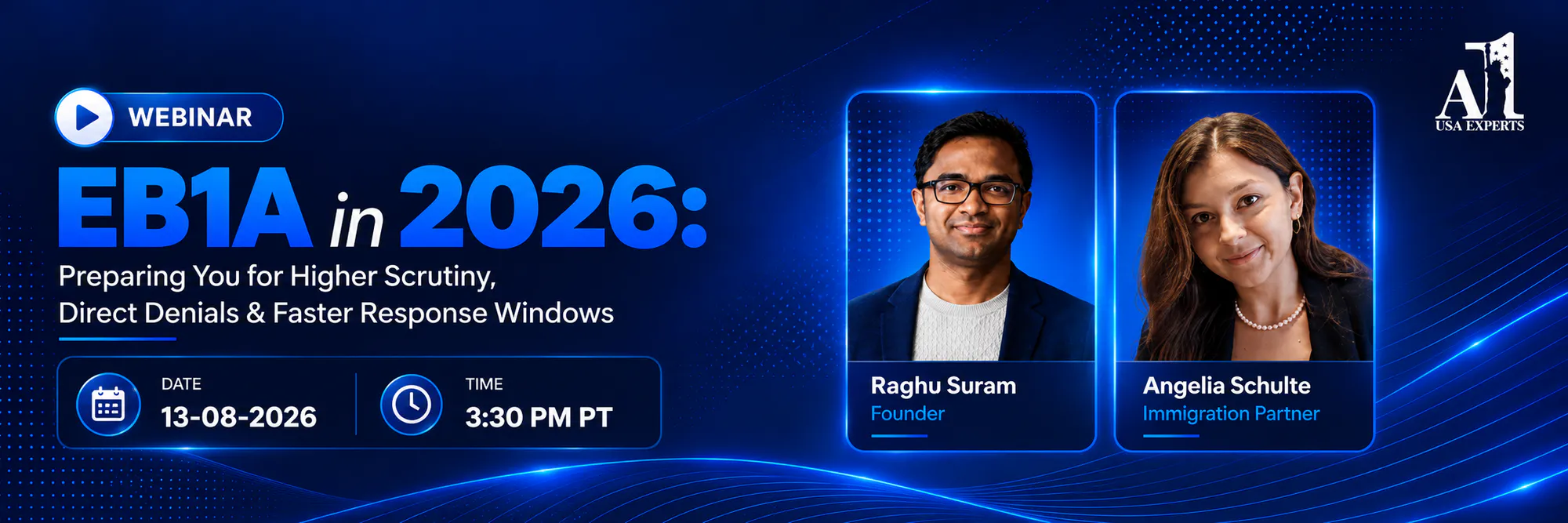
This webinar examined the changing U.S. immigration landscape for EB-1A, EB-2 NIW, and O-1A applicants
heading into 2026, focusing on recent USCIS policy developments and rising scrutiny in adjudications.
The session emphasized why a "first-time right" approach to filing has become increasingly important as
approval rates come under pressure and opportunities to fix a weak petition after filing become more
limited.
- Declining Approval Rates and Increased Scrutiny: The
speakers explained why EB-1A approval rates have declined from FY2023 levels and what heightened
USCIS scrutiny means for new applicants preparing to file.
- Denials Without RFE or NOID: Attendees learned about the
circumstances under which USCIS may deny a petition outright without first issuing a Request for
Evidence (RFE) or Notice of Intent to Deny (NOID), and why applicants should not treat an RFE as a
guaranteed opportunity to strengthen a weak case.
- Shorter RFE Response Windows: The webinar discussed how
potentially shorter RFE response windows could affect how petitioners prepare and organize their
evidence in advance of filing.
-
Strengthening the Evidentiary Record: The session highlighted why recommendation letters
alone may not be sufficient, and how independent, credible evidence can more effectively
substantiate claims of impact, recognition, and original contribution.
- Meeting Key EB-1A Criteria: Attendees gained insight into
what USCIS may expect when evaluating a "leading or critical role" and "original contributions," and
when combining similar achievements can help build a stronger overall argument.
- The Role of Citations and Premium Processing: The speakers
addressed how citation evidence can support original-contribution arguments for researchers, and
clarified whether premium processing changes how a petition is substantively evaluated.
-
Consequences of Denial and Refiling Strategy: The webinar covered what an EB-1A denial could
mean for future immigration filings, and outlined when and how an applicant can refile after a
denial by materially strengthening their evidence.
- Practical "First-Time Right" Preparation: Attendees
received actionable guidance on preparing an initial petition as though there will be no second
chance to explain it, with an emphasis on presenting the strongest claims as part of a clear,
consistent strategy rather than simply accumulating documents.
Who Attended?
This session was attended by researchers, engineers, scientists, physicians, entrepreneurs, technology
professionals, advanced degree holders, and individuals interested in pursuing permanent residence in
the United States through the EB-1A, EB-2 National Interest Waiver, or O-1A pathways.