Immigration news often reaches people through headlines. Policy changes. Travel bans. EB1A Visa bulletins.
But the real story usually begins much earlier, quietly, in the numbers. Recently, the U.S. added 39
countries to a travel restriction list. On the surface, it may appear like a
geopolitical update with limited relevance.
But when you follow the data, something much bigger emerges.
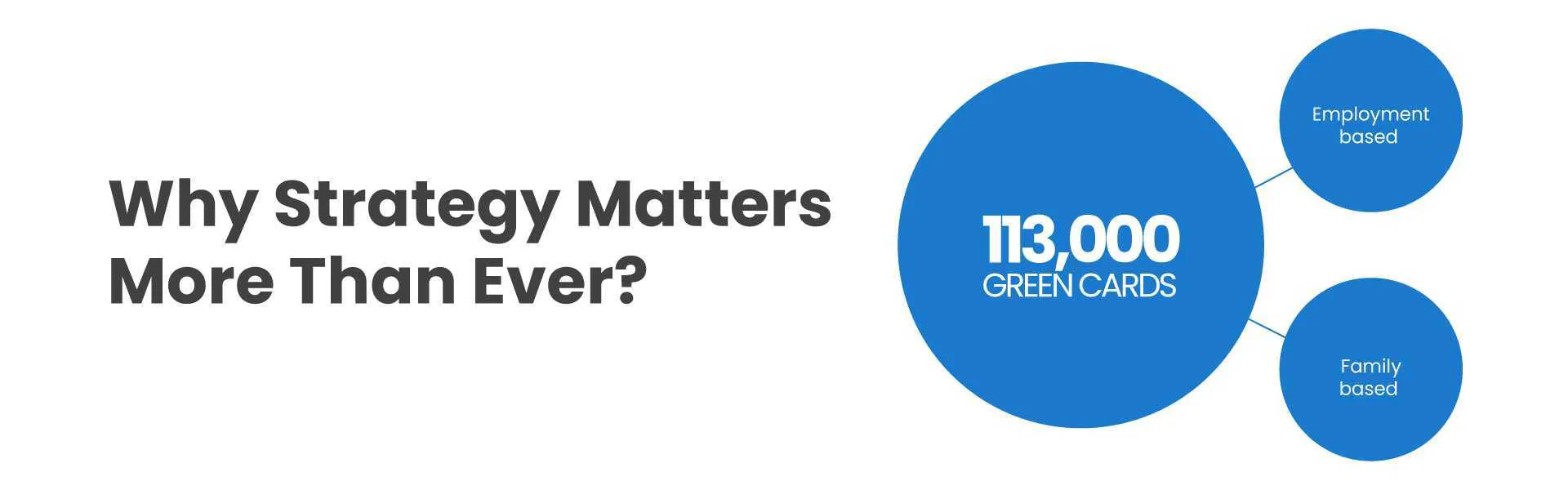
Across all immigration pathways, these 39 countries collectively account for approximately 113,000
green
cards issued every year.
That includes family-based visas, employment-based visas, refugee and asylum adjustments, diversity
visas,
and other special immigrant categories.
Now pause for a moment and ask the real question most people haven’t yet:
2. What happens when those green cards suddenly have nowhere to go?
Green Cards Don’t Disappear. They Get Reallocated.
U.S. immigration does not operate on an infinite supply. Every fiscal year is governed by strict
numerical
limits
managed by U.S.
Citizenship and Immigration Services and the U.S. Department of State.
Historically, when visas allocated to certain countries or categories are not used, the system does not
simply discard them.
Instead, there is a strong institutional push to reallocate unused visa numbers before the fiscal
year
ends.
This matters because visa numbers sitting idle represent political pressure, administrative
inefficiency,
and lost opportunity.
The system is designed to avoid that.
When issuance slows or stops for specific chargeability areas, unused numbers tend to spill over into
high-demand categories. And those categories are already clear:
Employment-based green cards
Family-based green cards
3. Why EB-1 Is Likely to Benefit First?
Within employment-based immigration, EB-1 has a unique role. It sits at the top of the preference
hierarchy and is often the first category to absorb excess visa availability when USCIS anticipates a
surplus. This is not a theory. We’ve seen it before.
In the most recent Visa Bulletin, EB-1 Final Action Dates advanced by almost an entire year. Movements
of
that magnitude do not happen randomly. USCIS does not move dates aggressively unless it expects
sufficient
visa numbers to support the demand. One plausible explanation is anticipatory front-loading.
If officials expect that tens of thousands of visas may go unused elsewhere due to new restrictions, it
makes sense to accelerate processing in high-demand categories rather than risk wasting visas at the end
of the fiscal year. In immigration, data moves first. Headlines follow later.
4. What This Means for Indian Professionals?
For Indian professionals, especially those stuck in EB-2 and EB-3 backlogs, this shift feels different.
Not because it guarantees outcomes, but because it changes the risk-reward equation. EB1A has always
existed as a pathway. What changes now is timing and momentum.
But this is where many applicants make a critical mistake. Increased visa availability does not
mean lower
standards. In fact, it often means the opposite. When interest in EB1A rises, scrutiny rises with it.
USCIS does not reward urgency-driven filings. It rewards clarity, structure, and well-evidenced impact.
Officers do not infer extraordinary ability. They require it to be demonstrated, validated, and
contextualized.
This is especially important for Indian professionals whose most meaningful contributions often occur:
Within large organizations
Inside collaborative teams
Under NDAs or internal confidentiality
Without public-facing attribution
Extraordinary ability still exists in these profiles. But it must be translated, not assumed.
5. Why Strategy Matters More Than Ever?
At EB1A Experts, the focus is not on
chasing trends or pushing every profile to
file quickly.
The first step is always a realistic evaluation.
That evaluation answers the questions that matter:
Does your work show sustained national or international impact?
Can your contributions be independently validated?
Is your profile ready now, or does it need strategic positioning?
EB1A is not about exaggeration. It is about alignment. Aligning real-world impact with USCIS
criteria. Aligning evidence with narrative. Aligning timing with readiness. A rushed filing can cost
years. A well-structured one can change everything.
6. The Bigger Picture
Nothing in immigration is guaranteed. Policy shifts are political. Numbers are complex. But patterns
leave
signals. When large pools of visas become constrained elsewhere, pressure builds. When pressure builds,
reallocation follows. And when reallocation happens, categories like EB-1 move first.
If you’re watching these developments and feeling a mix of hope and uncertainty, that’s normal. The
smartest next step isn’t filing. It’s understanding where you actually stand. Because sometimes, the
most
powerful realization isn’t that the system changed.
It’s that you were closer than you thought.
7. FAQs
1. What happens to unused green cards when certain countries face travel restrictions?
Unused green cards do not disappear. Under U.S. immigration law, visa numbers that are not utilized by
certain countries or categories
are often reallocated within the same fiscal year to high-demand categories, particularly
employment-based
and family-based green cards.
2. Can unused visas from restricted countries benefit EB-1 applicants?
Potentially, yes. When visa numbers go unused elsewhere, USCIS may advance final action dates in
high-demand categories like EB-1 to prevent waste.
This can result in faster movement, but it does not lower EB1A eligibility standards or approval
requirements.
3. Does increased visa availability make EB1A easier to qualify for?
No. Visa availability affects timing, not eligibility. USCIS continues to apply the same extraordinary
ability standards.
Strong evidence, clear impact, and proper alignment with EB1A criteria remain essential, regardless of
how
many visa numbers become available.
4. Should Indian professionals rush to file EB1A because of recent date movement?
Rushing is risky. Increased interest often leads to higher scrutiny. The right approach is a strategic
evaluation to determine readiness,
identify gaps, and ensure your profile is positioned correctly before filing, rather than reacting to
short-term visa bulletin changes.
5. What is the safest first step if I’m considering EB1A in this changing landscape?
Start with a professional profile evaluation. This helps you understand whether your work demonstrates
sustained impact,
whether it can be independently validated, and whether you should file now or strengthen your profile
before proceeding with an EB1A petition.
If you want clarity on whether EB1A fits your journey in this evolving landscape, start with an expert
evaluation from EB1A Experts. Data may open doors. Preparation determines who walks through
them.





 December 15, 2025
 3 min read