The February 2026 Visa
Bulletin was released by the U.S. Department of State.
Like many Indian professionals, you probably opened the chart as soon as it came out, scrolled to your category, and looked for even the smallest sign of progress. When the dates didn’t move, it was easy to feel disappointed or assume that nothing had changed behind the scenes.
But the February 2026 Visa Bulletin India update deserves a closer look. This month isn’t just
about dates staying the same. It’s about what those frozen dates are quietly signaling midway through
the fiscal year.
For Indian employment-based applicants, this bulletin feels less like a routine update and more like a
moment of reckoning. It underscores how risky passive waiting can be and why understanding the mechanics
of visa allocation matters more than ever. Rather than viewing the bulletin as a static list of dates,
it helps to see it as a snapshot of how visa limits are being managed in an increasingly strained
system.
2. What the February 2026 Visa Bulletin Didn’t Say Explicitly
When you look closely at a detailed February 2026 visa bulletin analysis, the lack of movement
becomes meaningful. The fact that EB1A visa cutoff dates India stayed
the same across multiple categories is rarely accidental.
This kind of pause usually means the State Department is strategically slowing things down to manage
visa numbers through the end of the fiscal year. It is a way to prevent demand from overshooting supply
too early and triggering sharp retrogressions later. While earlier months may have offered small
advances and short-lived optimism, this stagnation suggests a tighter, more cautious approach. In simple
terms, the system is conserving visas because demand remains extremely high.
3. India’s Employment-Based Backlog Is Structural, Not Temporary
The per-country cap limits India to 7 percent of total employment-based visas each year, roughly 25,620
numbers. While that cap hasn’t changed, the demand has continued to grow. As a result, the EB visa
backlog for Indians has turned EB-2 and EB-3 into decade-long queues.
The Indian
green card waiting time keeps stretching because far more petitions are filed than visas
available annually. The law is designed to control volume, not to account for a disproportionately large
applicant pool. Relying on policy fixes alone is uncertain at best under the current framework.
4. Why EB-1 Still Matters, Even Without Movement
Seeing no forward movement in EB-1, EB-2, EB-3 priority dates India can be discouraging,
especially for applicants hoping EB-1 would keep advancing. However, context matters here.
Right now, India’s EB-1 Final Action Date stands at February 1, 2023. Now, if we compare that with EB-2
at July 15, 2013 and EB-3 at November 15, 2013, EB-1 seems more hopeful than the other two.
Even when EB-1 slows down, it remains years ahead. More importantly, EB-1 benefits from unused visas
that spill over from other employment-based categories. As a result, EB-1 continues to be the strongest
option for qualified applicants. A slow-moving EB-1 is still far more efficient than a “moving” EB-2 or
EB-3.
5. Dates for Filing vs Final Action Dates — The Trap Many Applicants Fall Into
One of the most common mistakes applicants make is confusing the two charts. Final Action Dates
determine when a green card can actually be issued. Dates for Filing simply indicate when you are
allowed to submit your documents.
In the February 2026 bulletin, the EB-2 Date for Filing for India is December 1, 2013, only a few months
ahead of the Final Action Date of July 15, 2013. That narrow gap can feel encouraging, but it doesn’t
change the reality of visa availability. Filing early may offer peace of mind, but it rarely translates
into faster approval when supply remains severely constrained under the Employment based green card
India 2026 limits.
6. The Hidden Mechanics: Prorating and Statutory Limits
To really understand the February 2026 Visa Bulletin India, you have to look beyond the charts.
The worldwide employment-based visa limit is at least 140,000 per year. Once a country like India
exceeds the 7 percent threshold, visas must be issued strictly in priority date order.
That’s why India is officially considered oversubscribed. On top of that, certain categories face
additional reductions. For example, the Other Workers category is reduced due to NACARA-related
adjustments, cutting roughly 150 visas in FY 2026. These small technical changes highlight just how
tightly controlled the system is. Every visa number is tracked, allocated, and rationed.
7. What Indian EB Applicants Should Do Now
So what does this February 2026 visa bulletin analysis really mean for Indian applicants?
It means that waiting for a sudden breakthrough isn’t a plan.
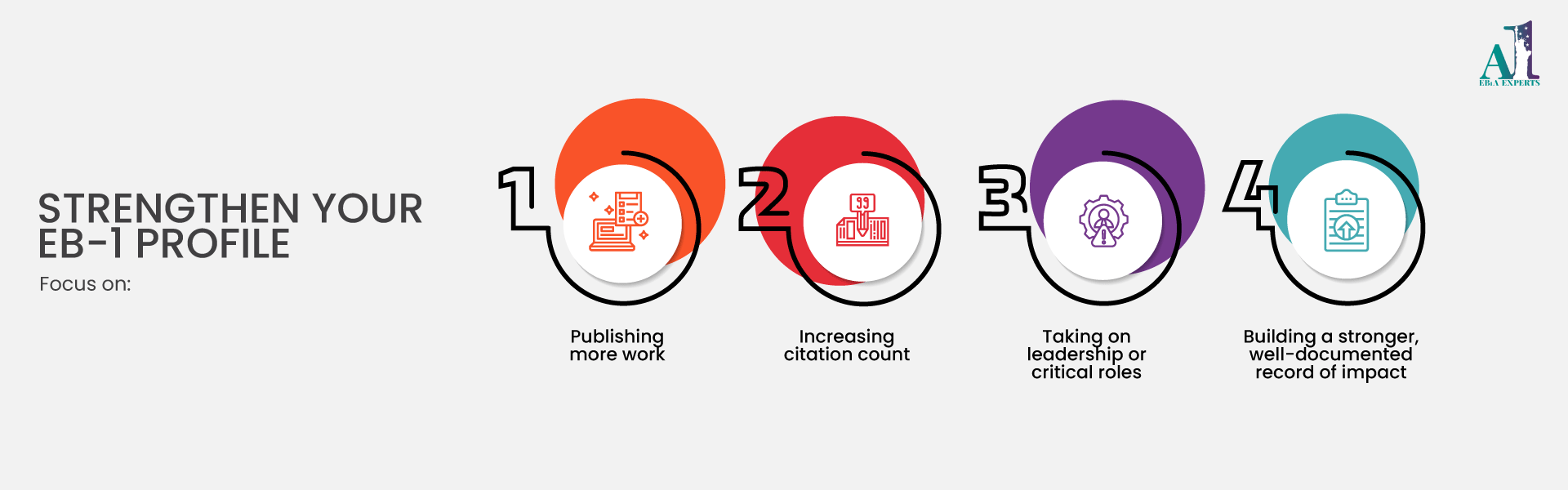
This period of delay should be treated as a call to action. If you want to qualify for EB-1, now is the
time to strengthen your profile, which includes publishing more, increasing citations, taking on
leadership roles, or building a stronger record of impact. Strategic filing decisions and category
upgrades matter far more than month-to-month bulletin movement, and in today’s environment, preparation
is only leverage you have over others.
8. Conclusion
The February 2026 Visa Bulletin is a clear wake-up call. The pause in movement doesn’t mean nothing is
happening. It means the system is under strain, and passive waiting only increases the risk of falling
further behind. This is the moment to shift from hope-based monitoring to strategy-driven planning.
Whether that means pursuing an EB-1 upgrade or reinforcing your existing case, proactive choices will
shape your timeline more than any single bulletin ever will.
So, stay informed, stay prepared, and look beyond the dates.
9. FAQs
1. What is the per-country limit mentioned in the bulletin?
The per-country limit caps any single country at 7% of the total annual employment-based and
family-sponsored visas.
Under U.S. immigration law, no country can receive more than 7% of the total annual preference visas.
For employment-based categories, this translates to roughly 25,620 visas per country per year.India
routinely exceeds this limit due to high demand across EB-1, EB-2, and EB-3 categories. When demand
exceeds the cap, visas must be issued strictly by priority date.
This statutory limit is one of the primary drivers of the long Indian employment-based backlog.
2. Why is the Certain Religious Workers category listed as U?
The category is listed as ‘U’ because the underlying program expired before visas could be issued.
The Certain Religious Workers (SR) category was authorized only through January 30, 2026.
U.S. law requires applicants to be admitted before the program’s expiration date. Because February
admissions would fall after expiration, the category is marked as Unauthorized (U).
This designation is procedural and not related to demand or visa availability. USCIS and the Department
of State must follow statutory authorization timelines strictly.
3. What does C mean in the charts?
‘C’ means the category is Current, and visas are available to all qualified applicants.
When a category is listed as Current, there is no backlog for that classification.
Applicants can be approved immediately once their case is complete and admissible. This status often
applies to categories with low demand or high visa availability. For employment-based cases, current
status can change quickly if demand increases. USCIS and the State Department monitor usage throughout
the fiscal year.
4. When were the allocations for the February bulletin determined?
Allocations were based on demand data available as of January 5, 2026.
The Department of State sets Visa Bulletin cutoffs using demand received up to a specific reporting
date. For the February 2026 bulletin, that cutoff was January 5, 2026. This includes approved petitions
and pending cases at USCIS and consulates. Late-arriving demand after that date is reflected in future
bulletins. This lag explains why bulletins often appear disconnected from real-time filings.
5. What is the annual limit for family-sponsored visas?
The family-sponsored preference visa limit for FY 2026 is 226,000.
Family-sponsored preference categories are subject to a separate annual numerical cap.
For fiscal year 2026, that cap is set at 226,000 visas. Immediate relatives of U.S. citizens are not
counted against this limit. Like employment-based visas, family-sponsored visas are also subject to
per-country limits. High-demand countries experience similar backlogs due to these statutory
constraints.






 December 22, 2025
|
December 22, 2025
|
 3 min read