
 Cloud-Based Healthcare Data
Architecture
Cloud-Based Healthcare Data
ArchitectureDesigned and implemented cloud healthcare data systems built for high performance, stability, and long-term scalability across large provider environments.
Scalability, Security & System
Resilience
Improved system scalability while strengthening security controls to support sensitive healthcare data and large-scale operational reliability.
Interoperability Across Provider
Networks Enabled smoother data exchange across healthcare networks, improving integration between platforms and reducing fragmentation in care systems.
Compliance + Data Integrity +
Operational EfficiencySupported regulatory compliance, protected patient data integrity, and improved operational efficiency across the U.S. healthcare ecosystem.

This case was positioned around field-level leadership, not just technical execution. Instead of treating the client as “one more architect on a team,” the petition highlighted how their architectural decisions shaped scalable healthcare cloud systems that impact how large provider networks operate nationwide. The narrative focused on leadership through system design authority, originality in problem-solving, and influence on healthcare data infrastructure outcomes - making the work EB1A-relevant even without public visibility.

To overcome the challenge of enterprise and healthcare work being embedded inside complex systems, the case relied on verifiable proof over job descriptions. Independent expert opinion letters established credibility and clearly explained why the client’s contributions were difficult, rare, and impactful within the field. System adoption metrics and measurable performance improvements (scalability, security, interoperability, compliance support) helped translate behind-the-scenes architecture work into adjudicator-friendly evidence. This replaced generic employer validation with stronger third-party support and real-world impact indicators.
The petition reinforced that the client’s work is not a one-time achievement—it directly supports ongoing national priorities in U.S. healthcare modernization. By continuing to build resilient, scalable healthcare data infrastructure, the client is positioned to strengthen interoperability, protect patient data integrity, improve operational efficiency, and support compliance readiness across provider networks—outcomes that contribute to long-term national health system performance.
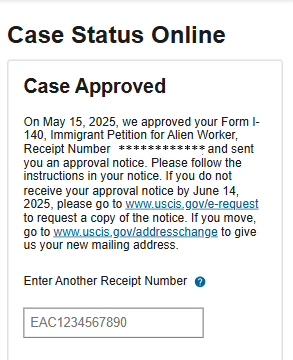
A successful EB1A approval for a Technical Architect, achieved through strong positioning, independent validation, and a clear demonstration of national-scale healthcare infrastructure impact.
94
Days
From evidence consolidation to national-interest framing, every detail is built for credibility and speed.
