
 Autonomous Vehicle Technology
Enablement
Autonomous Vehicle Technology
EnablementAdvances autonomous systems engineering by supporting integration workflows that improve how self-driving technologies are validated and scaled.
Hardware-in-Loop (HIL) Integration &
Validation
Strengthens reliability and real-world readiness of vehicle systems through rigorous HIL testing, integration verification, and simulation-driven confidence building.
Safety-Critical Engineering Outcomes
Supports safety-focused vehicle engineering where integration quality directly influences system stability, validation accuracy, and deployment readiness.
System Reliability & Fail-Safe
ReadinessImproves resilience of complex automotive software-hardware ecosystems by validating behavior under controlled scenarios and edge conditions.

We positioned the applicant around critical system-level impact, technical leadership, and sustained contribution—emphasizing autonomous vehicle readiness, integration rigor, and safety-critical outcomes.

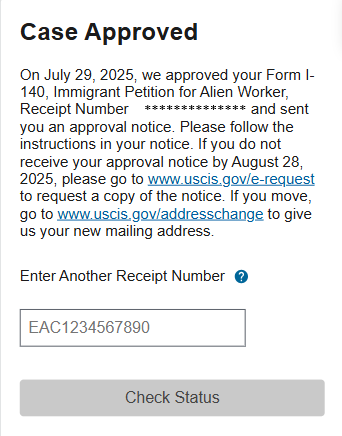
We consolidated complex engineering work into a clear, criterion-aligned story supported by strong documentation, strengthening the case presentation and enabling an approval after denial.
The applicant plans to continue advancing autonomous vehicle validation, smart automotive integration, and safety-ready engineering systems, aligned with U.S. priorities in mobility innovation, transportation safety, and next-generation automotive technology.
A strong turnaround driven by sharper positioning, stronger evidence alignment, and a clear demonstration of high-impact contributions in autonomous systems engineering.
29
Days
From evidence consolidation to national-interest framing, every detail is built for credibility and speed.
